
It has a mass of 7.016 Da. Rare lithium-6 (mass of 6.015 Da) has only 3 neutrons, reducing the atomic weight (average) of lithium to 6.941. The atomic mass (ma or m) is the mass of an atom.
What is the mass number of oxygen?
- Name: Oxygen Symbol: O Atomic Number: 8 Atomic Mass: 15.9994 amu Melting Point:-218.4 °C (54.750008 K, -361.12 °F) Boiling Point:-183.0 °C (90.15 K, -297.4 °F) Number of Protons/Electrons: 8 Number of Neutrons: 8 Classification: Non-metal Crystal Structure: Cubic Density @ 293 K: 1.429 g/cm 3 Color: colorless Atomic Structure.
- The atomic mass or relative isotopic mass refers to the mass of a single particle, and therefore is tied to a certain specific isotope of an element. The atomic mass is carried by the atomic nucleus, which occupies only about 10 -12 of the total volume of the atom or less, but it contains all the positive charge and at least 99.95% of the total.
- Atomic Mass of Oxygen Atomic mass of Oxygen is 15.9994 u.
2 Answers
The most common Isotope Mass for Oxygen is 16 Atomic Mass Units.
Explanation:
The Weighted Average Atomic Mass for each element is found on the periodic table (That long decimal number near the bottom of each box). This number is a combination of all the known Isotopes and basically tells you the average mass you would expect per atom if you grabbed a random handful of them.
The Mass Number is the mass of a particular atom individually and is measured in Atomic Mass Units (AMU); these will always be whole numbers.
The most common Isotope is found by rounding the Weighted average found on the periodic table to the nearest whole number.
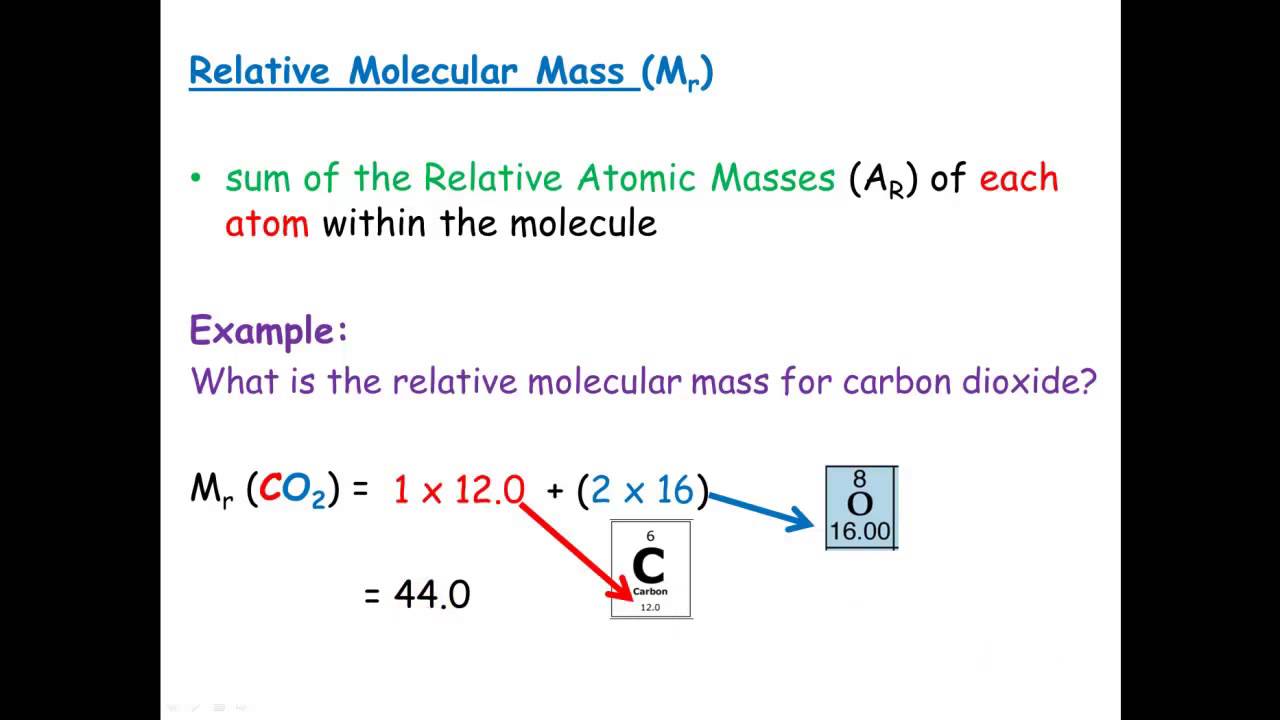
In this case Oxygen has a Weighted Average Atomic Mass of 15.999 AMU. Hp laserjet 3015 drivers for mac. So the Mass Number is 16.
O Atomic Mass Number
Explanation:
Mass number
The most common isotope of oxygen has 8 neutrons. Its atomic number is 8.
This isotope of oxygen is oxygen-16.
Another isotope of oxygen has 9 neutrons.
This isotope is oxygen-17.
A third oxygen isotope has 10 neutrons.
This oxygen isotope is oxygen-18.
The following is the isotopic or nuclear notation of an isotope.
Related questions
Taken from http://www.sizes.com/units/atomic_mass_unit.htm
History of the atomic mass unit
Stanislao Cannizzaro (1826–1910 Streets of rage 4 steam. ), the pioneer in this field, adopted the hydrogen atom as a standard of mass and set its atomic weight at 2. Others accepted the idea of using a specific atom as a standard of mass, but preferred a more massive standard in order to reduce experimental error.
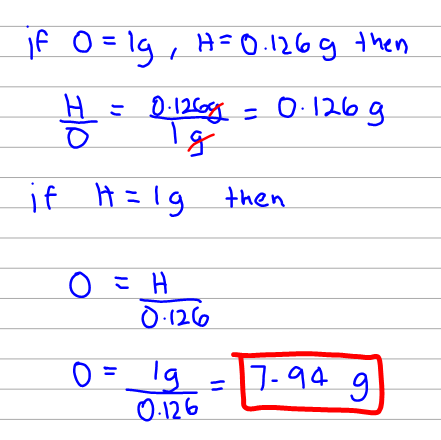
As early as 1850, chemists used a unit of atomic weight based on saying the atomic weight of oxygen was 16. Oxygen was chosen because it forms chemical compounds with many other elements, simplifying determination of their atomic weights. Sixteen was chosen because it was the lowest whole number that could be assigned to oxygen and still have an atomic weight for hydrogen that was not less than 1.
The 0=16 scale was formalized when a committee appointed by the Deutsche Chemische Gesellschaft called for the formation of an international commission on atomic weights in March 1899. A commission of 57 members was formed. Since the commission carried on its business by correspondence, the size proved unwieldy, and the Gesellschaft suggested a smaller committee be elected. A 3-member International Committee of Atomic Weights was duly elected, and in 1903 issued its first report, using the 0=16 scale.5
Taking isotopes into account
The discovery of isotopes complicated the picture. In nature, pure oxygen is composed of a mixture of isotopes: some oxygen atoms are more massive than others.
This was no problem for the chemists’ calculations as long as the relative abundance of the isotopes in their reagents remained constant, though it confirmed that oxygen’s atomic weight was the only one that in principle would be a whole number (hydrogen’s, for example, was 1.000 8).
Physicists, however, dealing with atoms and not reagents, required a unit that distinguished between isotopes. At least as early as 19276 physicists were using an atomic mass unit defined as equal to one-sixteenth of the mass of the oxygen-16 atom (the isotope of oxygen containing a total of 16 protons and neutrons).
In 1919, isotopes of oxygen with mass 17 and 18 were discovered.7 Thus the two amu’s clearly diverged: one based on one-sixteenth of the average mass of the oxygen atoms in the chemist’s laboratory, and the other based on one-sixteenth of the mass of an atom of a particular isotope of oxygen.
In 1956, Alfred Nier (at the bar in the Hotel Krasnapolski in Amsterdam) and independently A. Ölander8, both members of the Commission on Atomic Masses of the IUPAP, suggested to Josef Mattauch that the atomic weight scale be based on carbon-12. That would be okay with physicists, since carbon-12 was already used as a standard in mass spectroscopy. The chemists resisted making the amu one-sixteenth the mass of an oxygen-16 atom; it would change their atomic weights by about 275 parts per million. Making the amu one-twelfth the mass of a carbon-12 nucleus, however, would lead to only a 42 parts per million change, which seemed within reason.
O Atomic Mass Rounded
Mattauch set to work enthusiastically proselytizing the physicists, while E. Wichers lobbied the chemists.9 In the years 1959–1961 the chemists and physicists resolved to use the isotope carbon-12 as the standard, setting its atomic mass at 12.
O Atomic Mass